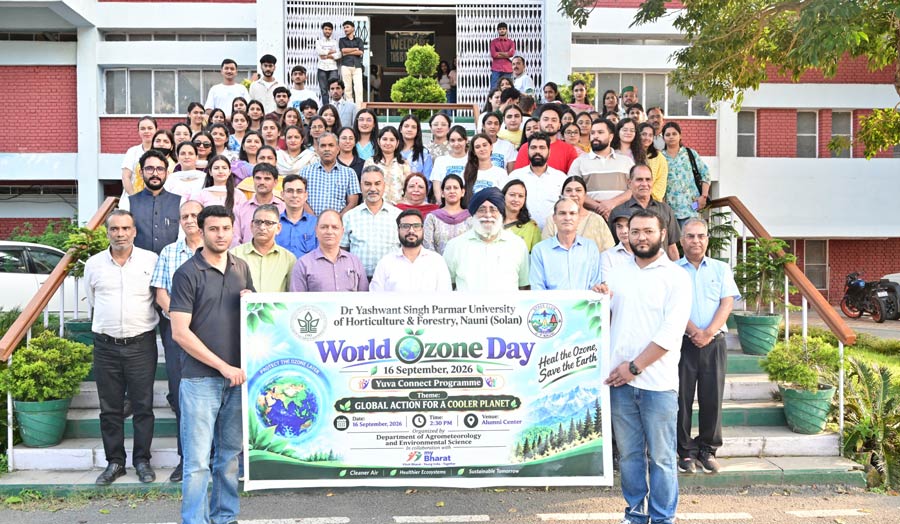
The theme for World Environment Day 2026, “Inspired by Nature,” highlights the urgent need to address climate change, strengthen climate action, and recognize nature’s vital role in building climate resilience. At the global level, Azerbaijan will host World Environment Day 2026.
The theme is both timely and relevant. However, as the saying goes, “Actions speak louder than words.” Achieving meaningful outcomes will require firm commitments, collective responsibility, and sustained efforts from governments, industries, civil society organizations, and citizens alike.
Historically, the over-exploitation of natural resources by industrialized nations has contributed significantly to environmental degradation and the accumulation of what is often described as an “ecological debt.” While debates over responsibility continue, pointing fingers will not solve the problem. The need of the hour is collective action because we are all in the same boat when it comes to climate change.

The depletion of the ozone layer and the increasing concentration of greenhouse gases pose serious threats to life on Earth. Rising temperatures jeopardize food security, water security, livelihood security, health security, and economic stability. Climate change is also accelerating biodiversity loss through habitat destruction, species migration, and species extinction.
According to the World Health Organization, climate change contributes to the spread of diseases and intensifies health risks. Heat stress can lead to heatstroke, dehydration, cardiovascular ailments, kidney disorders, and other serious health conditions. Vector-borne diseases are also expected to expand their geographical range as temperatures rise. Furthermore, increasing temperatures are linked to psychological stress, anxiety, aggression, and depression, posing additional challenges to societies worldwide.
Scientists across the globe feel a moral responsibility to develop sustainable strategies and innovative solutions to mitigate and adapt to climate change while safeguarding vulnerable communities, flora, fauna, biodiversity, and both terrestrial and aquatic ecosystems.
Today, the world is witnessing unprecedented changes in climate and weather patterns compared to the pre-industrial era. Acidification, desertification, forest fires, declining agricultural productivity, glacier retreat, sea-level rise, intense rainfall events, landslides, soil erosion, and mass species migration are clear warning signals. These developments are contributing to biodiversity loss, resource scarcity, malnutrition, and growing water insecurity.
As the proverb wisely states, “We do not inherit the Earth from our ancestors; we borrow it from our children.” Therefore, environmental stewardship is not merely an option but a responsibility.
According to the United Nations Framework Convention on Climate Change (UNFCCC), climate change refers to a change in climate that is directly or indirectly attributed to human activity and that alters the composition of the global atmosphere, in addition to natural climate variability observed over comparable time periods.
Since the pre-industrial era, atmospheric concentrations of major greenhouse gases have risen significantly:
- Carbon dioxide (CO₂): from approximately 278 ppm to over 420 ppm.
- Methane (CH₄): from approximately 722 ppb to over 1,900 ppb, with a substantially greater warming potential than carbon dioxide.
- Nitrous oxide (N₂O): from approximately 271 ppb to over 335 ppb.
In addition, fluorinated gases such as chlorofluorocarbons (CFCs), hydrofluorocarbons (HFCs), perfluorocarbons, and sulfur hexafluoride are highly potent greenhouse gases with exceptionally high Global Warming Potentials.
The Intergovernmental Panel on Climate Change (IPCC) has repeatedly warned that human activities have already caused significant global warming above pre-industrial levels. Unless urgent action is taken, the consequences for ecosystems and human societies will become increasingly severe.
The impacts of ozone depletion remain profound:
- Increased risk of skin cancer, cataracts, immune suppression, and DNA damage.
- Reduced agricultural productivity and impaired plant growth.
- Disruption of marine ecosystems and fisheries.
- Coral bleaching and degradation of critical marine habitats.
The solution does not lie in technology and policy alone. It also requires a transformation in lifestyles, consumption patterns, and public awareness. As Mahatma Gandhi wisely observed, “The Earth provides enough to satisfy every man’s need, but not every man’s greed.”
Global environmental governance has evolved through landmark initiatives such as the Vienna Convention, the Earth Summit, the UNFCCC, the Kyoto Protocol, and the Paris Agreement. These agreements provide a roadmap for sustainable development and climate action, but their success depends on effective implementation.
India has played a proactive role by promoting renewable energy, enhancing forest cover, restoring degraded landscapes, and strengthening climate adaptation measures. However, much remains to be done.
Rivers, often described as the lifelines of civilization, are under increasing pressure from pollution, encroachment, illegal mining, and unplanned urbanization. A stitch in time saves nine; therefore, urgent interventions through ecological restoration, biodiversity conservation, pollution control, and sustainable river management are essential.
Protecting rivers is not merely an environmental obligation; it is an economic and social necessity. Healthy rivers support biodiversity, recharge groundwater, sustain agriculture, and provide livelihoods to millions.
A sustainable future requires integrated solid waste management, green technologies, climate-resilient infrastructure, renewable energy, and environmentally responsible lifestyles. Equally important are strong public participation and community ownership of conservation efforts.
Climate change does not discriminate, yet its burden falls disproportionately on the poor, marginalized communities, and women. Governments, NGOs, educational institutions, industries, policymakers, and citizens must join hands to strengthen climate resilience, promote adaptation, enhance carbon sinks through afforestation, and reduce greenhouse gas emissions.
As the saying goes, “Many hands make light work.” Collective action, informed policies, and unwavering commitment can help secure food, water, livelihood, and health security for future generations.
The future of our planet depends on the choices we make today. If we fail to act now, we may find that “we have been penny wise and pound foolish” in our treatment of nature. The time for action is now. By drawing inspiration from nature and working in harmony with it, humanity can build a greener, safer, and more resilient future for all.
Our planet’s future depends on what we do today.